
Jude
Joseph
Lovell
WRITER - FATHER - HUSBAND - BIBLIOPHILE
A second son must find glory where he can.
-GEORGE R.R. MARTIN, A CLASH OF KINGS
ANIKAMATE ME
An old mate remembered, a courageous woman celebrated, a legendary band resurrected.
July 21, 2026
I’VE BEEN THINKING A LOT about Chris Barlow, my college roommate and close friend for thirty-seven years, who passed away a year ago today following two battles with cancer of the digestive tract. Chris was a supremely good friend to me for more than half of my time here, and while I got to see him rarely in person over the last two decades, and I did not always understand or fully appreciate him, his death has left a hole within me that’s been a struggle to fill during the momentous and frankly bananas year since. An irreconcilable quandary that affronts me still is that I cannot think of any reason why Chris deserved to die at age 55. In the end there is none.
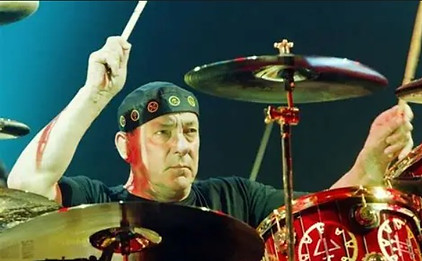
Nearly six years ago, in between his two bouts with the same dreadful illness, Chris was the first person to inform me of the death of Neil Peart, the legendary drummer for Rush (my favorite band). Peart’s foil was glioblastoma, commonly known as a brain tumor. Chris and I were both gigantic Rush fans, having bonded over the Canadian band’s music for many years, and of Peart’s work specifically. Since the Rush camp had kept Peart’s condition private—that was Peart’s way—this news landed like a thousand tons of bricks. Like so many legions of his other fans around the world, we entered into a cycle of grief that carried far more weight than the typical news of a celebrity’s death might have. It seemed utterly inconceivable that the planet could keep rotating without Peart out there keeping time for it.
But of course, this loss was not the end of the road for us, any more than it was the end of hardship or grief. To the end, Chris was in some ways a much more sensitive and idealistic person than I am. I admitted above that I didn’t always understand him, which is a way of saying that I did not always feel the way he would.
Still, I knew him, and I was aware that there were many things that troubled Chris in the years between Peart’s death in 2020 and his own in 2025. The global pandemic. Racism, George Floyd, social injustice, Donald Trump. Some of these matters seemed to literally keep him up at night. There are many outcomes of Chris’ death that sadden me tremendously. But him not being around to see the war against Iran, or the events surrounding ICE in Minnesota, or WWF fights at the White House: these are not among them.
Yet one thing that anybody who knew Chris even a little understood about him was that he sought refuge from the darkness of existence in the glowing light of popular music. Chris was a generous listener to almost all genres. He kept an open mind. He gave so many artists and bands the benefit of the doubt that most of us would have given up on years or sometimes decades earlier.
I’m such a Rush fanatic that I even wrote two books about the band, and Chris is all over both. The first book, Random Samples, I even dedicated to him; the second was being finalized at the time of his death. He did receive an advanced copy, though. Later on, of course, a memorial page for Chris was added to the conclusion of that second volume, which I called Pause, Rewind, Replay.
We talked about the forthcoming book a little in our final conversation on July 9, 2025. Chris died on July 21. The fact that he passed on within five years of the death of the drummer he most admired in the world (and Chris really loved the drums) is just one of those mysteries that gets left behind for the rest of us to ruminate on after these losses happen. In that second book I had issued my final “goodbye” to the band, who had performed their last show with Peart on August 1, 2015 in Los Angeles. Chris and I had both been lucky enough to witness this tour live.
I published that second book on October 3, 2025, which would have been Chris’ 56th birthday. But before that week was over, on October 6, Rush’s Geddy Lee and Alex Lifeson made an absolutely incredible announcement, at least to those of us who admired the band: they were reforming and going on tour once again in 2026. And even more amazing than that - they had hired a new drummer, a woman, a German—a relatively obscure musician who had never even listened to much Rush to go out with them and sit in the place of the legendary Neil Peart. Her name is Anika Nilles.
When this news first emerged, even separate from the unbelievable proximity to my own humble book launch and memories of my friend on his birthday, it seemed so insane that my first thought was probably similar to many other Rush fans’: this can’t be true. But our culture being as digitally connected and as fast-paced as it is, in no time it was clear that it was no hoax. The founding members of Rush had done something previously considered inconceivable. They had replaced the one who most of us thought of as the GOAT.
Geddy and Alex, in their consummately professional and congenial manner, swiftly clarified: their old friend and brother Neil Peart was not being replaced. They knew better than anyone that this could not be done. But they had come to realize that they both still loved playing, still found joy in one another as they always had, and felt tremendous pride in all they had accomplished in their forty-plus years with Peart. It occurred to them that they could go out and celebrate all of these things, Peart in particular, if they could find a musician they could gel with who would have the moxie to sit in The Professor’s chair.
But who they found, how they found her, and how well it has all come off in the time since is one of the most remarkable stories in modern music history. By this point everyone knows that Geddy Lee learned about the awesomely talented German drummer through his bass technician, who had seen her performing with the guitarist Jeff Beck on an international tour fairly recently. Geddy did pretty much what the rest of us did when we first heard her name: he sat down and checked out YouTube videos and Instagram posts of Nilles playing drums in these rock-jazzy fusion pieces which were the sort of thing she had established a modest reputation with. And he liked what he saw.
I don’t really know enough about Nilles to have much to say on her personal story. But when I watched some of these videos myself I noticed what most of the rest of us did, and I noticed it even before, almost, I saw anything else - like her being relatively young (she is 43, thirty years younger than Geddy and Alex), kind of rakishly attractive, with a long blond ponytail (depends on your tastes I guess), and, unbelievably, female! Girls typically don’t even like Rush, as everybody knows! What in the bloody hell was going on here??
What I saw in the videos was an incredible drummer. Absolutely.
Rush fans all know the rest by now: the guys (Geddy and Alex) secretly flew her to Toronto for an “audition.” No one else in over a decade had ever been asked to do this. They played Rush music with her for five days. For four of them, it did not seem to be working. But on the last day, it all clicked. Once that occurred the whole idea seemed to sprout legs. The new trio continued to bond musically, then began planning what they had dubbed the “Fifty Something” tour. Geddy and Alex seemed motivated and invigorated. They posted a video with Nilles that same month of October 2025, explaining their tour plans.
The fan reaction to this previously unimaginable news was explosive. No doubt there were some early nay-sayers who felt that it was a terrible choice, because there was no way anyone could sit in as a member of Rush where Neil Peart had sat (completely forgetting the fact that Peart was actually Rush’s second drummer). But there were two reasons why this “backlash” or negative response to Rush’s tour plans flamed out quickly. First was the way that the surviving members of Rush explained what they were trying to do, referenced earlier. They had also sought out and received the full blessing of Peart’s widow, Carrie Nuttall, and the daughter Peart left behind - both of whom issued public statements of support. In the end, Alex and Geddy concluded that their old bandmate and brother would understand.
The second reason was Nilles herself: her playing, her relatively quiet demeanor, and her extraordinary courage. Sure, based on this highly unlikely alliance with two rock n’ roll icons, she stood to gain fame and maybe a lot of money. I have no idea of the bottom line concerning the latter. But I did know she would be instantly thrust under an unprecedented level of scrutiny. She would have to contend with all of those who felt like nobody should replace Peart, and then those (hopefully a lot fewer) types who felt that if someone were to sit in for The Professor, she could not be female. And then, of course, every single beat she threw down in a public arena would be compared to Neil Peart’s own playing. Who could stand up to all of that?
Nilles did the only thing one could really do against such daunting odds. She said little - maybe by some sort of direction, who knows - and she let her drumming do most of the talking. Smart move. Videos of her previous work proliferated, and what they showed was a woman, indeed, with extraordinary rhythm and ability, who had clearly worked long and hard to achieve a certain virtuosity. When she did personally take to social media or speak out in some way, she revealed herself to have a sense of humor and a reasonable amalgam of wonder and nerves to be asked to fill such a role. Yet somehow there was also a quiet confidence there. It seemed that she believed in herself, and she understood that Geddy and Alex believed in her too. This seemed to be all Nilles needed to hit the power button and go.
Meanwhile, the news of the Fifty Something Tour flew across the world, after eleven years with no Rush shows and what seemed like no possibility for the band to ever play again. I kept thinking of Chris. He would have been absolutely gobsmacked, like most of us.
Owing to the incredible demand, the tour doubled and nearly tripled in length, extending into 2027. The band decided to bring their shows to South America and to Europe, even planning to perform in at least one country they had never played in before: Poland. It was well known that for many years near the end of Rush’s time with Peart, especially during their triumphant R40 Tour in 2015 in the United States and Canada, Peart had resisted touring overseas. But Geddy and Alex had publicly stated many times that they felt bad about denying those fans a chance to see them play again. Now, they would be able to correct that oversight.
This period, late 2025 going into 2026, was a truly remarkable time to be a Rush fan. As the anticipation for the new tour mounted, Geddy and Alex spoke to various press outlets, updating fans on how things were progressing with Nilles, the kind of show they envisioned, and the ways they planned to celebrate and honor Neil Peart.
I could not stop contemplating the irony that both Chris and Peart had succumbed to different forms of the same illness; their final chapters were intertwined in my mind, even though they were five-plus years apart. Neil Peart was only a few short months into a long-desired retirement, with an 11-year-old daughter, when he received his terminal diagnosis. And as every Rush fan is already aware, Peart had previously endured the terrible double-tragedies of losing his only daughter at the time, Selena, and his common law wife Jackie, within a period of one year in 1997. For him to then have to battle a terminal disease seemed cruel and unusual.
As for Chris Barlow, who had in some ways led a solitary existence and had lost both of his parents before losing his own life, not being around for the Rush reunion and reinvention also seemed brutally unfair. Chris never asked for very much. I wrote in my Rush books and elsewhere that one of the great things about him was his unwavering ability to find happiness and to remain positive about life in general, in spite of many things that worked against him. Peart wrote in one late-era Rush tune: “We could be down and gone, but we hold on.” Chris did that. He did it for as long as he could.
Chris would have reveled in the choice of Nilles, there can be no doubt of that. He would have been overjoyed that she is a woman—not that it was so incredible that a woman could play great drums, but because he would never have seen it coming (like the rest of us). But Chris had spent a lifetime celebrating new and unexpected finds in music. That sort of discovery was one of his favorite things about life. He would have been enthralled with Nilles’ actual drumming, and feverish with excitement about seeing her take on Peart’s iconic drum parts.
One of the toughest things for me about the last year has been having to accept the fact that he did not live long enough to see all this stuff happen. That might sound silly. Surely there were many other things going on that would seem at least on paper to be of greater consequence.
I’m not so sure that would be true for Chris, though. And he and I had done so much bonding over Rush’s music for so long. Knowing the pure sense of wonder Chris would have drawn from all of this is proving to be a heavy burden. But it’s nothing compared to what Chris himself, or Neil, or all the other legions of innocent people afflicted with cancer, have been through.
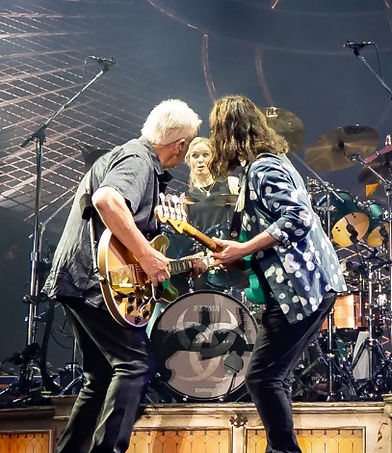
Finally, the Fifty Something Tour kicked off in Los Angeles - the same place where Rush had played their last concert with Peart - in June 2026. Now they re-emerged with a four-night stand and a whole new show, with a younger, pony-tailed woman bashing the drums. It was a really remarkable, utterly strange, but exciting thing to watch unfold. As the band kicked off the first night with their classic seventies-era epic “Xanadu” - a song that had never been used to open a Rush show - and Geddy and Alex emerged from clouds of dry ice with double-neck bass and guitar slung over their 70+ year old shoulders, Rush fans around the world practically combusted en masse.
The response was incredible. Naturally, the videos and images blew up everywhere, so that all those legions of fascinated fans who couldn’t be there in person still saw the tour’s opening moments - even the full shows if they so desired. Suddenly the whole culture seemed to be abuzz with this 50-year-old band. Variety, the renowned film publication, even ran a review written by a younger writer who dubbed Rush “the hipster band of 2026” and quipped, “Where has Rush been all my life?” 1
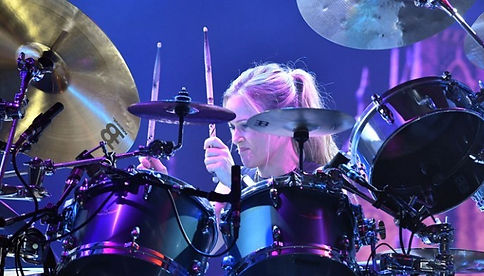
Similarly ubiquitous were clips of the blond, energetic Nilles hammering out some of the most iconic drum fills in the history of rock n’ roll. It was like a global rebirth for air drummers. Nilles was a powerhouse. When I saw some of these videos myself and heard the notoriously male-heavy crowd roaring in response, I felt weirdly proud of someone I did not even know - and an almost indescribable joy at seeing my very favorite band climb out of some chrysalis into a familiar but also new and glorious manifestation.
Life is too short, my friends. We’ve all learned that—or we’re in the process of it. I sure have. As we keep on holding on, working, growing or growing old; dealing with the perplexing realities of our times, the spiralling madness of man made structures, or the consequences of our disregard for the things we did not make; a question emerges. Where do we locate these moments of true joy, of spontaneous happiness, that makes us forget about all that stuff?
I know rock n’ roll shows and popular music in general are transitory. They can’t untangle real-world snarls, heal our souls, or give us eternal life. But when I see the images of two legendary musicians whose work I’ve admired since I was thirteen years old beaming with giddy happiness onstage; and I watch a formerly unheralded woman fervently battering a drum kit with energy and muscle and pure guts; and I imagine my old friend, who had to face down an early death, somehow watching it all from an unearthly position post-cancer, post-pain—these thoughts nearly bring this old timer to tears. In a good way.
Somehow, in an entirely separate and almost equally astonishing development, this coming October - Chris Barlow’s birthday month - I will be in attendance at a Fifty Something Rush show in Washington, D.C., with my twin brother John. He too had a long and rich friendship with Chris. I know the show will be amazing. I also know we will both have at least one moment where we wish with all our hearts that Chris could be there with us. But then again, if we believe his life and spirit live on in both of us for as long as we are here, then in a very real sense, he will be.
1 - “How Did Rush Become the Hipster Band of 2026? A New Fan’s Appreciation of Their Triumphant Comeback at the Forum;” Willman, Chris; June 16, 2026
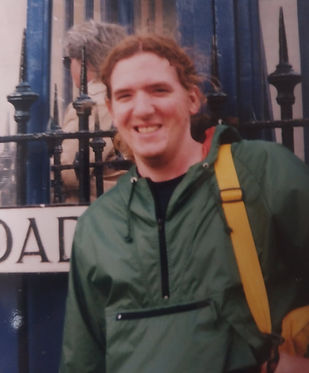
Chris in Scotland, 1997. Photo by the author.
Neil Peart doing what he did better than anyone on Earth.
Anika Nilles performs with Rush, June 2026.
L-R: Alex Lifeson, Anika Nilles, and Geddy Lee perform as Rush, June 2026.